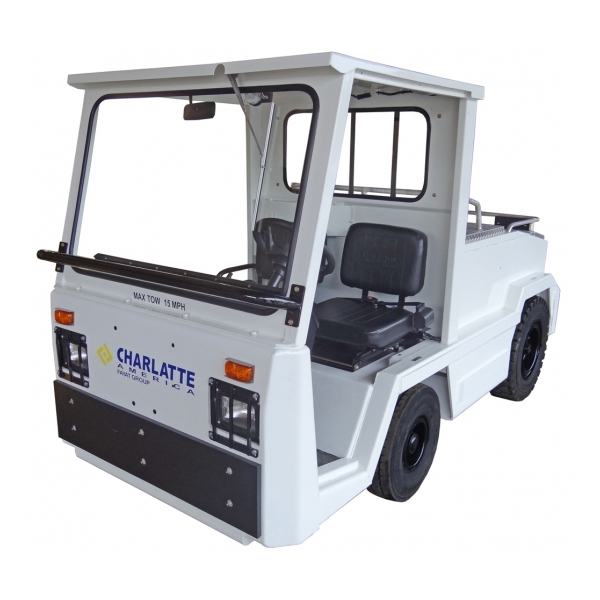
In modern airports, electric ground support equipment (GSE) has become the backbone of sustainable operations. Among these, Charlatte electric tractors are widely used for towing baggage carts, cargo dollies, and performing day-to-day ramp duties. Unlike diesel tractors, they run silently, produce zero emissions, and reduce airport carbon footprints.
At the heart of every Charlatte electric tractor lies its lithium-ion battery system. This advanced energy source delivers high power, fast charging, and long service life. However, operators often face a puzzling situation: even though the tractor is new, the battery charges quickly and drains quickly as well.
Table of Contents

How Lithium-Ion Batteries Work in Charlatte Electric Tractors
To understand problems, we must first understand how lithium-ion batteries function inside Charlatte tractors.
Key Components:
- Battery Cells – Small units that store and release electrical energy.
- Battery Management System (BMS) – Controls charging, discharging, and balances cells to prevent damage.
- Charger – Provides energy input at a controlled rate.
- Power Distribution System – Transfers battery energy to the electric motor and auxiliaries.
Charging & Discharging Cycle
- During charging, lithium ions move from the cathode to the anode and store energy.
- During discharging, ions flow back to the cathode, releasing power to the tractor’s motor.
Unlike traditional lead-acid batteries, lithium-ion batteries allow:
- Faster charging
- Higher energy density (more power in smaller size)
- Longer cycle life (2,000–5,000 cycles depending on usage)
But they also demand precise control, making the BMS a critical component.
Why Fast Charging & Fast Draining Happens (Even in New Batteries)
Operators often complain:
“The Charlatte tractor is brand new. Still, the battery is charging fast but also draining fast.”
This situation can have several technical reasons:
- Battery Cell Imbalance – If some cells charge faster than others, the BMS stops charging early to protect the pack, giving the impression of “fast charge.” During discharge, weaker cells drop voltage faster, causing quick drain.
- Charger Compatibility Issues – Using the wrong charger model or incorrect voltage/amperage setting may cause incomplete charging.
- High Ambient Temperature – Airports are hot environments. Excessive heat accelerates both charging and draining. Lithium-ion batteries perform best between 15°C to 35°C.
- Excessive Load – If the tractor frequently tows heavier loads than recommended, the battery drains faster.
- Poor BMS Calibration – Sometimes, the Battery Management System in new units isn’t properly calibrated, misreporting the actual state of charge.
- Operator Habits – Short, frequent charging instead of full charging cycles can confuse the BMS and reduce effective capacity.
Common Causes of Fast Drainage in New Charlatte Batteries
Let’s explore the detailed technical causes:
- Internal Resistance Problems
- Manufacturing defects in certain cells can cause high resistance.
- This generates heat, wastes energy, and shortens runtime.
- Overcharging & Deep Discharging
- If operators accidentally leave the tractor plugged in beyond safe limits (rare, but possible with faulty chargers), the BMS may degrade cells.
- Repeated deep discharge below 20% also stresses the pack.
- Faulty Charger or Loose Wiring
- Loose connectors or damaged cables reduce charging efficiency.
- A faulty charger may pump inconsistent voltage.
- Operator Usage Patterns
- Continuous stop-and-go driving, excessive acceleration, or towing on steep slopes drains energy faster.
- Software/Firmware Errors
- Some Charlatte tractors require periodic firmware updates for their BMS.
- If outdated, the battery may misreport capacity.
Repair Guide: Step-by-Step Troubleshooting
If your Charlatte lithium-ion battery is charging and draining too fast, here’s a practical troubleshooting sequence:
1. Initial Inspection
- Check physical condition: swelling, leakage, or burn marks.
- Inspect terminals and connectors for corrosion or looseness.
2. Check the Charger
- Confirm correct voltage and amperage rating.
- Swap with another compatible charger to test differences.
3. Battery Management System (BMS) Check
- Use diagnostic software provided by Charlatte.
- Check cell balance, temperature sensors, and error codes.
4. Voltage & Cell Balancing Test
- Measure each cell’s voltage using a multimeter.
- If large differences (>0.1V) exist between cells, balancing is required.
5. Reset or Reprogram BMS
- Sometimes, a simple BMS reset fixes misreporting issues.
- Update firmware if available.
6. Replace Faulty Cells or Modules
- If certain cells are weak, replace individual modules instead of the whole pack (cost-saving option).
7. Final Load Test
- After repairs, perform a towing simulation to verify normal charging/discharging cycles.
Points Every Operator & Technician Should Know
- Safe Charging Practices – Always use OEM chargers. Avoid overcharging.
- Depth of Discharge (DOD) Control – Never let batteries drop below 20%.
- Temperature Management – Avoid charging in extreme heat (>40°C).
- Charging Schedules – Prefer overnight slow charging for better cell health.
- Daily Log Maintenance – Keep track of charging time, operating hours, and any abnormalities.
When to Repair vs. When to Replace
Repair is enough when:
- Only 1–2 modules are faulty.
- BMS needs recalibration.
- Charger cable/connectors are damaged.
Replacement is required when:
- Battery pack has multiple failed cells.
- Severe swelling, overheating, or fire risk is detected.
- Pack has already reached 70–80% capacity loss.
Battery Replacement Cost for Charlatte Electric Tractors
The cost depends on battery type, capacity, and supplier.
- Small packs (80–150Ah, 48V): $5,000–$8,000 (₹4–6.5 lakh)
- Medium packs (240–400Ah, 72V/80V): $10,000–$20,000 (₹8–16 lakh)
- Large packs (600–840Ah, 80V/96V): $25,000–$40,000 (₹20–32 lakh)
OEM vs. Third-Party Replacement
- OEM Charlatte Batteries – Expensive but reliable, with warranty.
- Third-Party Lithium Packs – Cheaper, but may void warranty.
Most new Charlatte tractors come with a 3–5 year battery warranty, so always check coverage before replacing.
Maintenance Tips to Improve Battery Life
- Charge slowly overnight whenever possible.
- Avoid full 0–100% cycles daily; keep battery between 20–80%.
- Store tractor in shaded, ventilated areas.
- Regularly clean battery terminals and check connections.
- Update BMS firmware during service schedules.
You may ask questions
Q1. Why does my new Charlatte battery drain so fast?
- Likely due to cell imbalance, charger issues, or BMS miscalibration.
Q2. How long does a Charlatte lithium-ion battery last?
- Typically 5–8 years or 2,000–5,000 charge cycles, depending on usage.
Q3. Can I use a third-party charger?
- Not recommended. Always use Charlatte-approved chargers.
Q4. What is the warranty on Charlatte batteries?
- Generally 3–5 years, but varies by supplier and model.
Conclusion
Charlatte electric tractors are a cornerstone of modern ground support operations, delivering quiet, efficient, and eco-friendly performance. However, even new lithium-ion batteries can sometimes charge and drain quickly due to BMS issues, charger faults, or operational habits.
By following a structured repair guide, understanding key technical points, and maintaining best charging practices, operators can significantly extend battery life.
When repair is not enough, knowing the replacement cost helps in budgeting. With proper care, a Charlatte lithium-ion battery can last years, ensuring seamless airport operations and reduced maintenance costs.
Hello my friend! I want to say that this article is awesome, nice written and include approximately all important infos. I would like to see more posts like this.