In the world of airport ground support equipment (GSE), one of the most crucial machines is the Air Conditioning Unit (ACU). The ACU ensures that aircraft cabins remain at the correct temperature when parked at the airport, improving passenger comfort and protecting sensitive avionics.
Like every technical machine, the ACU has a starting safety system designed to protect the equipment from damage and prevent unsafe operations. One important component of this system is the starting safety relay, which often receives its supply through the alternator D+ terminal.
When the ACU fails to start properly or shows abnormal behavior, technicians frequently trace the issue back to the D+ circuit or the safety relay. Understanding how this works, what faults occur, and how to fix them is essential for any GSE technician.
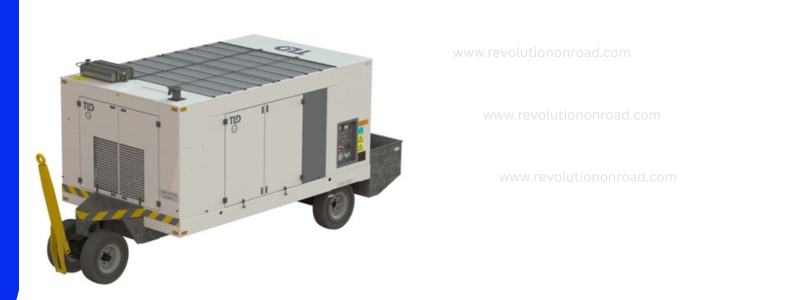
Table of Contents
1. Understanding the Starting Safety Relay in ACU
The starting safety relay is a protective component that ensures the ACU engine starts only under safe conditions.
· It prevents the starter motor from engaging when the alternator is already running.
· It ensures the engine will not crank if certain safety interlocks are not satisfied.
· It avoids electrical overloads by controlling when current reaches the starter solenoid.
In simple words, the safety relay acts as a gatekeeper that protects both the ACU engine and its electrical system.
2. The Function of the Alternator D+ Terminal
The D+ terminal of the alternator is a small but vital connection. Its functions include:
· Providing excitation current to the alternator field winding during startup.
· Acting as a signal output to indicate when the alternator is charging.
· Sending positive voltage once the engine is running and the alternator is generating current.
In many ACU systems, this signal is used to supply the safety relay coil. This way, the relay is energized only when the alternator is running, ensuring that the starter cannot engage while the engine is already in motion.
3. Why the Safety Relay is Supplied by D+
Using the alternator D+ for the safety relay supply has several advantages:
· Prevents starter damage: Once the engine runs, D+ provides positive voltage, energizing the relay and disabling the starter circuit.
· Protects alternator and battery: Prevents unnecessary cranking when alternator is charging.
· System safety: Avoids simultaneous load connection that may cause surges.
In short, the D+ connection ensures a fail-safe start/stop cycle.
4. Common Faults in ACU Starting Safety Relay
When this system develops faults, the ACU may fail to start, show warning alarms, or suffer from irregular engine operation. The main faults include:
4.1 No Positive Supply from D+
· Cause: Alternator not charging, broken wire, poor connection.
· Effect: Safety relay does not energize, starter may misbehave.
4.2 Safety Relay Stuck (Mechanical Fault)
· Cause: Relay coil burnt, contacts welded.
· Effect: Starter may remain engaged even after engine starts → damage to flywheel/starter.
4.3 Backfeed Current from alternator D.
· Cause: Wrong wiring or diode failure.
· Effect: Engine continues running after key is turned off, draining battery.
4.4 Weak Alternator Signal
· Cause: Alternator regulator issue.
· Effect: Relay energizes intermittently → engine mis-start or ACU fails to start reliably.
4.5 Loose or Corroded Wiring
· Cause: Dust, vibration, or moisture at terminals.
· Effect: Relay may not energize or may energize late.
4.6 Safety Relay Coil Burnout
· Cause: Overvoltage or continuous overheating.
· Effect: ACU will not start because relay is permanently open.
5. Step-by-Step Troubleshooting Guide
When an ACU shows a starting fault related to the safety relay and D+, follow these steps carefully:
Step 1: Visual Inspection
· Check alternator wiring to the D+ terminal.
· Look for loose connectors, corrosion, or broken wires.
Step 2: Measure D+ Voltage
· Use a multimeter to check D+ output:
· Before engine start: ~0V.
· After engine running: 12–28V (depending on system).
· If no voltage → alternator or regulator fault.
Step 3: Test Relay Operation
· Check if relay clicks when engine starts.
· If no click → relay coil defective or D+ supply missing.
Step 4: Bypass Test (for diagnosis only)
· Temporarily supply relay coil with external positive.
· If relay works → alternator D+ signal is faulty.
· If still no response → relay is faulty.
Step 5: Inspect Starter Interlock Wiring
· Ensure the starter solenoid wiring passes through the safety relay correctly.
· Wrong wiring can cause starter to engage continuously.
Step 6: Replace Faulty Components
· Replace damaged relay with exact rating.
· If alternator D+ output weak → replace or repair alternator.
6. How to Solve the Faults
· No D+ Output → Repair or replace alternator.
· Relay Stuck Closed → Replace relay; never attempt to repair contacts.
· Backfeed Current → Install diode or check wiring.
· Weak Alternator Signal → Check regulator and alternator brushes.
· Loose Connections → Clean, tighten, and apply anti-corrosion spray.
· Burnt Coil → Replace relay with OEM-approved component.
7. Preventive Measures
To avoid frequent faults:
· Carry out monthly inspection of alternator wiring.
· Test relay function during scheduled ACU maintenance.
· Keep electrical connectors clean and tight.
· Replace relays after recommended service hours even if working.
· Ensure alternator belt tension is correct to maintain proper charging.
Conclusion
The ACU starting safety relay supplied by alternator D+ plays a critical role in ensuring that the air conditioning unit operates safely. When faults occur, they usually stem from alternator output issues, relay malfunctions, or wiring problems. By following a systematic troubleshooting process—starting with checking the alternator D+ voltage, testing the relay, and verifying wiring integrity—technicians can quickly restore the ACU to proper working condition.
Regular preventive maintenance ensures fewer breakdowns, less downtime, and greater reliability of airport operations.